Marseille soap stands out as one of the world's finest natural soaps—a staple trusted by locals for generations. As a Marseille native with years of experience using it daily, I've seen its versatility firsthand: perfect for bathing, household cleaning, laundry, and even easing muscle cramps.
Yet counterfeits flood the market, denying many its genuine benefits. Drawing from traditional knowledge and personal expertise, here are my 5 reliable tips to distinguish real Marseille soap from fakes.
 Contents
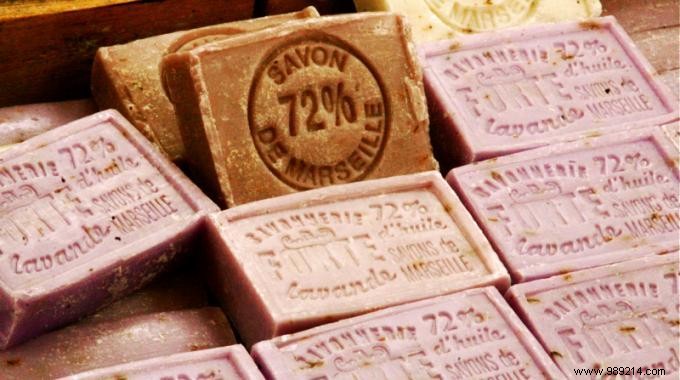
Authentic Marseille soap must contain at least 72% vegetable oils—a hallmark stamped directly on the bar. Traditionally crafted from olive oil, reputable artisans may also incorporate coconut or palm oil for variety.
True artisanal Marseille soap relies solely on vegetable oils, laurel oil, and soda—free from animal fats, dyes, or synthetic additives common in supermarket versions.
Olive oil-based bars display a natural green hue, sometimes shifting to brown with age. Palm, copra, or peanut oil variants are pure white. Authentic pieces come as firm cubes or flakes.
Pure Marseille soap carries the subtle, natural scent of its oils—distinctly olive if that's the base. It contains no added perfumes. Scented variants like lavender or almond are delightful derivatives, not the original.
A genuine cube feels firm, even hard, when new. After use and drying, it develops characteristic cracks yet retains its shape and efficacy for years. Fakes turn mushy and dissolve easily when wet, while real soap resists melting at low temperatures.
You might think 'Marseille,' and you'd be spot on—but without a protected origin label, 90% of commercial products are foreign imitations. For those afar, trusted online retailers offer genuine options.
Expect to pay 15-20€ per kg, with better value in larger quantities. Hypoallergenic, bactericidal, and fully biodegradable, this soap excels for laundry, home cleaning, skin care, and treating cramps. In my home, it's the go-to for everything!
